🧬 Post-Surgical Hyperpigmentation (PIH)
Updated: Dec 15, 2025
Clinical Overview • Prevention • Treatment
Post-surgical hyperpigmentation is common, especially in medium to dark skin tones 🤎🤎.It occurs when the skin produces excess melanin in response to inflammation, friction, or UV exposure.
✅ The good news: PIH is preventable and treatable — consistency is essential.
☀️ 1. Sun Protection — Most Important Step
UV exposure can double pigmentation and delay healing.
Clinical protocol:
🧴 SPF 50+ broad-spectrum sunscreen daily
🔁 Reapply every 2–3 hours when exposed
🧪 Prefer physical blockers: zinc oxide / titanium dioxide
👕 Keep the area covered (clothing or silicone sheets) when possible
🩹 2. Silicone Therapy — Healing & Pigment Control
Silicone helps regulate healing and reduces darkening + thick scarring.
How to use:
💧 Silicone gel: apply twice dailyOR
📎 Silicone sheets: wear 8–12 hours/day
⏳ Duration: 6–12 weeks minimum
🧪 3. Medical-Grade Topicals
(Start only after full wound closure)
Effective ingredients:
🔹 Azelaic Acid 15–20% – inflammation + pigment control
🔹 Tranexamic Acid 5% – stubborn pigmentation
🔹 Niacinamide 4–10% – gentle, reduces melanin transfer
🔹 Vitamin C 10–20% – brightening + collagen support
🔹 Retinoids – faster skin turnover
🔹 Alpha Arbutin – mild melanin regulator
🚫 Do NOT use on fresh wounds:
AHA / BHA acids
Retinoids
Bleaching agents
⏰ Typical start: 2–4 weeks post-procedure, once fully healed.
🏥 4. In-Clinic Medical Treatments
(Only after complete healing)
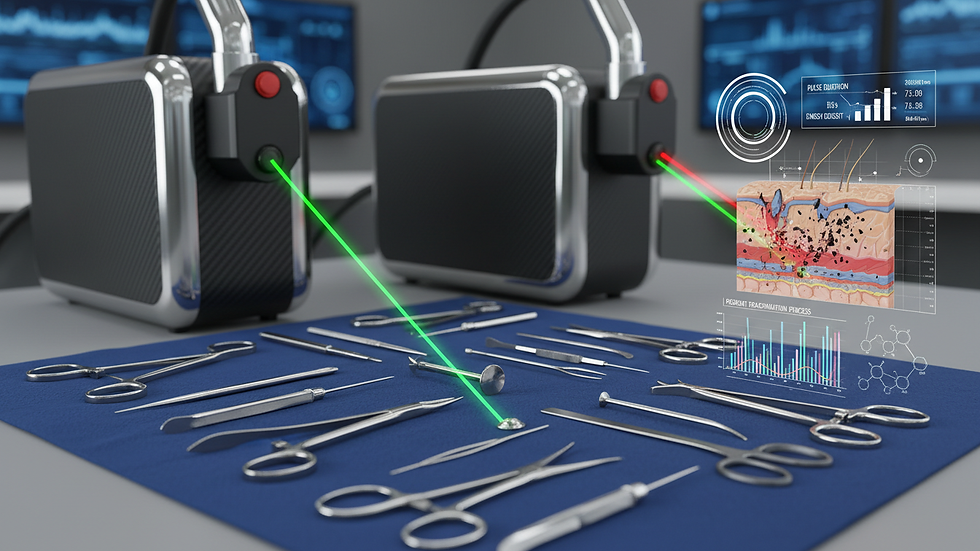
🔦 Q-Switched Laser
Breaks down excess melanin
Safe for most skin tones
📅 Every 2–4 weeks
🔥 Fractional Laser (CO₂ / Er:YAG)
For scar texture + pigment
⚠️ Must be performed by a certified doctor
🧵 Microneedling
Improves pigmentation + scar quality
Safe for darker skin types
🧴 Chemical Peels
Light peels only (mandelic / lactic / modified Jessner)
❌ Avoid strong peels unless medically advised
❄️ 5. Anti-Inflammatory Care
More inflammation = more pigment.
Best practices:
🧊 Cold compress (not directly on skin)
💦 Keep the area moisturized
✋ Avoid picking or friction
🫧 Use gentle cleansers only (no scrubs)
💊 6. Supportive Supplements
(Adjunct only — not a cure)
🍊 Vitamin C (500–1000 mg)
⚙️ Zinc
🧬 Collagen peptides
🦠 Probiotics (supports healing)
🚫 What to Avoid
🌞 Direct sun exposure
🧽 Early exfoliation or scrubbing
⚠️ Hydroquinone without medical supervision
🔥 Aggressive lasers too early
♨️ Sauna / steam rooms
❌ Random bleaching products
🩺 When to See a Doctor
Consult a specialist if:
⏳ Pigmentation worsens after 3 months
⬆️ Scars become raised or firm (keloid risk)
🔴 Area becomes red, hot, or painful
🩹 The surgical area was large or cosmetic
Why Choose Huzz Ink Clinic Emirates Hills?
At Huzz Ink Clinic Emirates Hills, all tattooing, paramedical, laser, and scar-related procedures are treated as medical-grade skin interventions, not cosmetic services. Our work spans professional tattooing, tattoo removal, paramedical tattooing, scar modulation, and advanced laser treatments—each performed under regulated clinical standards, advanced technology, and structured healing protocols designed to protect skin integrity and long-term outcomes.
Here’s what defines our clinical standard:
✅ DHA-Licensed & Fully Disposable
Fully licensed by the Dubai Health Authority (DHA) and operating as the only fully disposable tattoo and laser clinic in the region. Every needle, cartridge, and critical instrument is single-use to eliminate cross-contamination and maintain the highest safety standards.
✅ Advanced Laser & Skin Technologies
Use of Q-switched laser systems and CO₂ fractional laser technology for tattoo removal, pigment management, scar treatment, and controlled skin regeneration.
✅ Medically Supervised Care
All procedures are medically supervised and performed under strict health protocols, with hospital-grade sterilization standards applied across all treatments.
✅ Personalized Aftercare & Silicone Therapy
Each patient receives a customized aftercare plan, with silicone therapy integrated when clinically indicated to support optimal healing, scar control, and skin recovery.
✅ Paramedical & Scar Treatment Expertise
Specialized expertise in paramedical tattooing, scar camouflage, and CO₂ fractional laser scar treatments, offering comprehensive solutions focused on skin function, recovery, and appearance.
Clinic Information
Huzz Ink Clinic – Emirates Hills, Dubai
📍 Location Emirates Hills, Dubai
⏰ Hours: Open daily 10:00 AM – 6:00 PM (By appointment only)
📞 Phone: +971508775993
🌐 Website: www.HuzzInk.com